
The Lore Behind The Lines of Code image
Archive File // 003

The Lore Behind The Lines of Code

From accidental combos in Street Fighter II to the origins of the ESRB rating system. Step beyond the screen and explore the fascinating hardware secrets, design quirks, and historical anomalies of the golden era.

Ready to uncover the museum's hidden exhibits?

Begin the Tour

Exhibit A

Coin-Op Curiosities

Arcade cabinets were designed to extract quarters, but their hardware limitations birthed iconic mechanics.

01

Street Fighter II

The defining mechanic of modern fighting games—the combo—was entirely accidental. During development, producer Noritaka Funamizu noticed a bug where players could input a second attack during the animation of a first. He deemed it too difficult to execute for average players and left it in.
02

Mortal Kombat

The digitized blood and visceral fatalities were so controversial upon release that it triggered United States congressional hearings in 1993, directly leading to the creation of the Entertainment Software Rating Board (ESRB).

03

Out Run

Yu Suzuki's masterpiece achieved its breathtaking sense of speed without true 3D polygons. Instead, it used "Super-Scaler" technology, rapidly scaling 2D sprites to simulate depth, creating the illusion of a three-dimensional world moving toward the player.

04

Final Fight

Before becoming a legendary beat-'em-up in its own right, Final Fight was originally developed as a sequel to the 1987 Street Fighter, tentatively titled "Street Fighter '89". The title was changed when operators pointed out it played nothing like a one-on-one fighter.

05

R-Type

The iconic invincible "Force" pod, which could be attached to the front or back of the ship, was inspired by the behavior of dung beetles. This bizarre inspiration resulted in one of the most tactical mechanics in shoot-'em-up history.

06

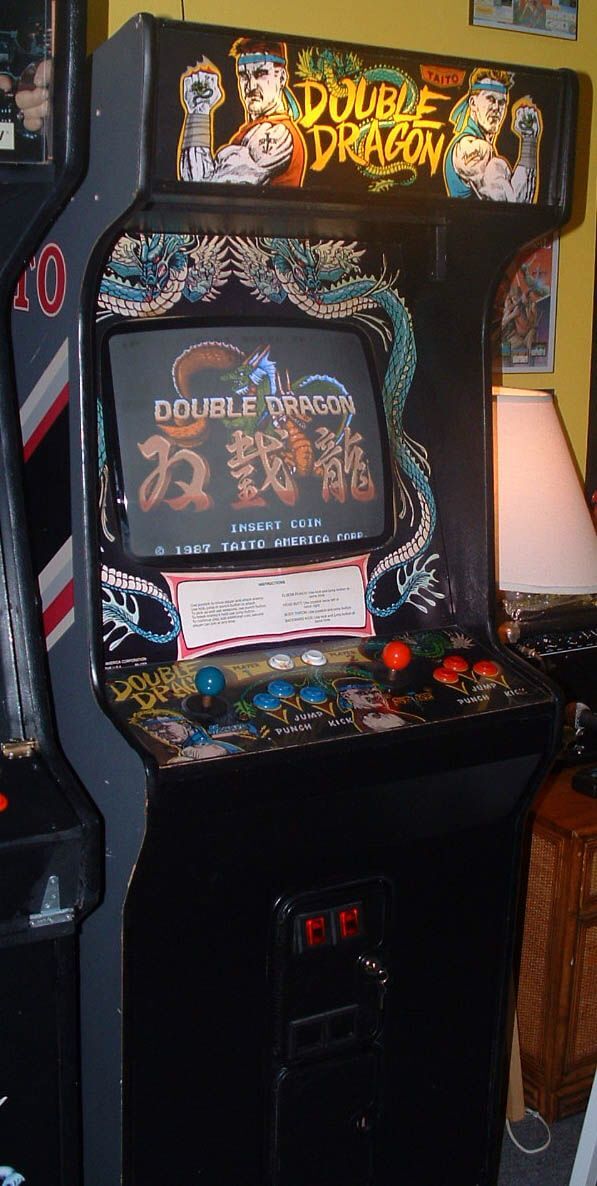
Double Dragon

The game featured one of the earliest instances of friendly fire in a co-op game. If two players defeated the final boss together, the game forced them to fight each other to the death to determine who would win Marian's affection.

Exhibit B

16-Bit Home Console Revelations

When arcade experiences migrated to living rooms, developers had to employ ingenious programming tricks to bypass the strict memory limits of cartridges.

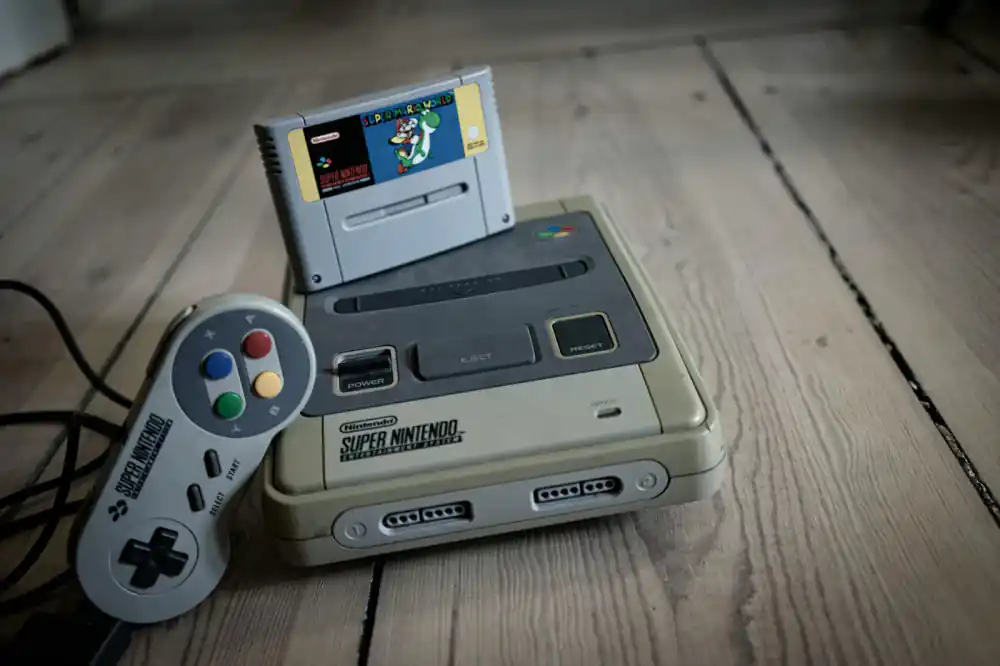
Super Mario World

Shigeru Miyamoto wanted Mario to ride a dinosaur since the original Super Mario Bros., but the NES hardware lacked the processing power to manage the extra sprites. Yoshi finally debuted years later when the SNES provided the necessary memory.

Donkey Kong Country

Rare utilized Advanced Computer Modelling (ACM) to pre-render 3D graphics on high-end Silicon Graphics workstations, then compressed them into 2D sprites. This trick made the SNES appear capable of 3D rendering far beyond its actual hardware specs.

Super Mario Kart

The SNES's famous "Mode 7" chip allowed a flat background layer to be rotated and scaled freely. The developers essentially drew a giant flat track and spun the entire world around the player's stationary kart sprite to create the driving perspective.

Super Nintendo Entertainment System console macro shot
Pile of retro RPG cartridges

Chrono Trigger

Developed by the "Dream Team" (Hironobu Sakaguchi, Yuji Horii, and Akira Toriyama), the game features over a dozen unique endings. The revolutionary "New Game+" feature was practically invented here, allowing players to carry over their stats and challenge the final boss at any point in the timeline.

Final Fantasy VI

The famous Opera House scene was an immense technical challenge. Composer Nobuo Uematsu couldn't use actual voice acting, so he synthesized a vocal melody that sounded like human speech, timing the text to match the simulated singing rhythm perfectly.

Super Metroid

The game's open-ended map design famously allowed players to bypass intended pathways by mastering advanced, hidden movement techniques like the wall jump and bomb jump. This "sequence breaking" birthed the modern speedrunning community.

The Archives

Submit a Missing Fact

Know a secret developer code, a hidden Easter egg, or a bizarre regional localization difference that belongs in the Hall of Fame? Send your findings to the museum curator.

Museum Contact

Location
Pixel Hall Of
London, Greater London
WC2H 9JQ
United Kingdom
London, Greater London WC2H 9JQ, United Kingdom